
TB500 is a synthetic peptide associated with thymosin beta-4 (Tβ4), a naturally occurring peptide involved in cell movement, tissue repair and inflammation. It has become particularly popular in training and recovery communities because of interest in its potential role in healing, recovery and tissue repair. You’ll often see TB500 and thymosin beta-4 described as though […]
Research & Guides
CJC-1295 Ipamorelin: Benefits, Dosage & Side Effects
CJC-1295 and Ipamorelin are commonly combined because they stimulate the body’s natural release of growth hormone (GH) through two different pathways. Rather than supplying growth hormone directly, the combination is designed around encouraging the pituitary gland to release more of its own. CJC-1295 No DAC acts like GHRH (growth hormone-releasing hormone), which signals the pituitary […]
KPV Peptide: Benefits, Research & Side Effects
KPV is a small peptide made from just three amino acids. It comes from alpha-MSH (alpha-melanocyte-stimulating hormone), a naturally occurring hormone involved in inflammation, immune activity and skin pigmentation. KPV appears to retain some of alpha-MSH’s anti-inflammatory activity without producing its pigmentation effects. Researchers are particularly interested in how it affects the signalling pathways that […]
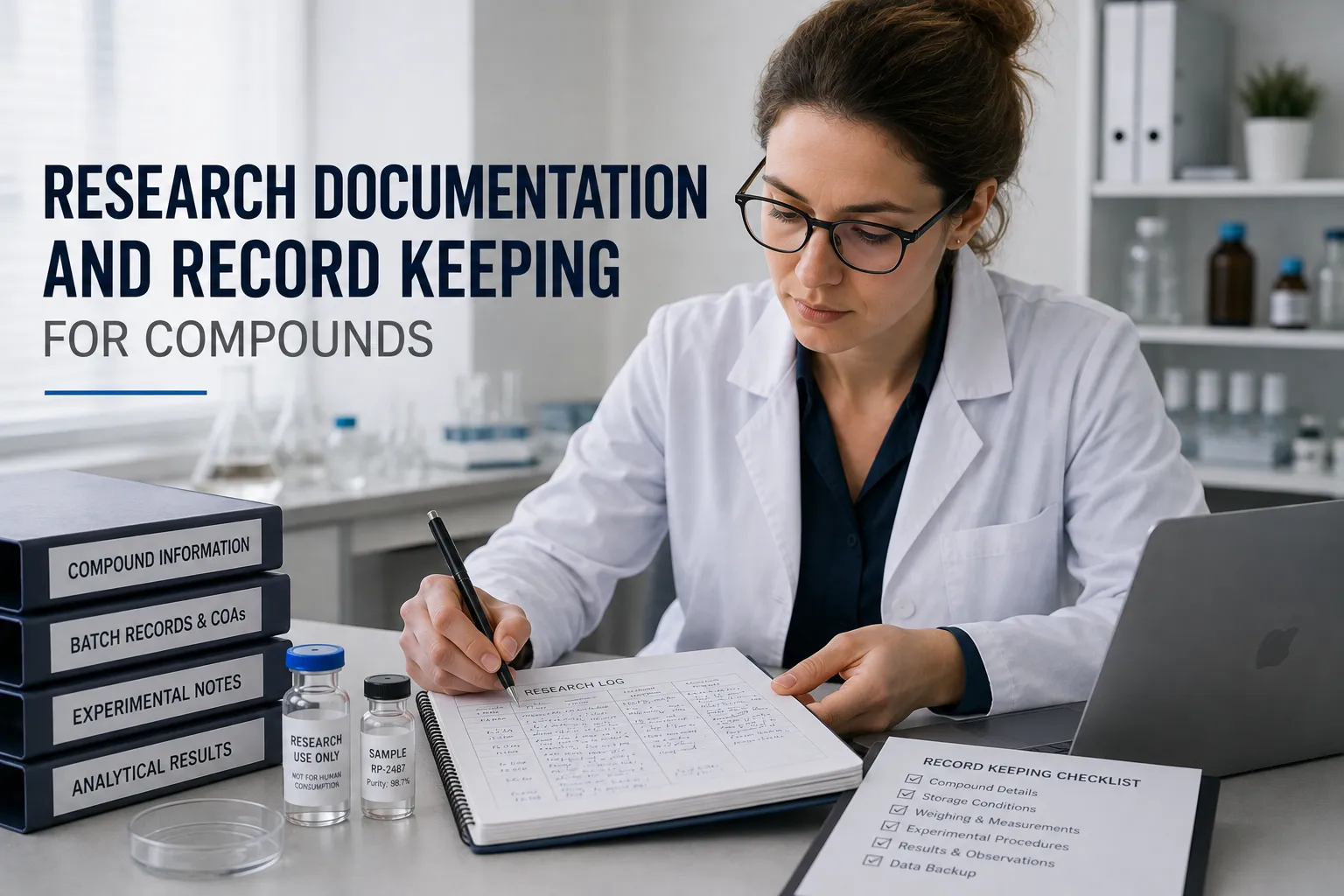
Research Documentation and Record Keeping for Compounds
In legitimate research settings, documentation is not an afterthought. It is the thread that connects a compound to its identity, its quality, its handling and its results. Poor record keeping does not just create administrative untidiness. It makes results uninterpretable, undermines quality assurance, and is often the first thing that fails an audit. This guide […]
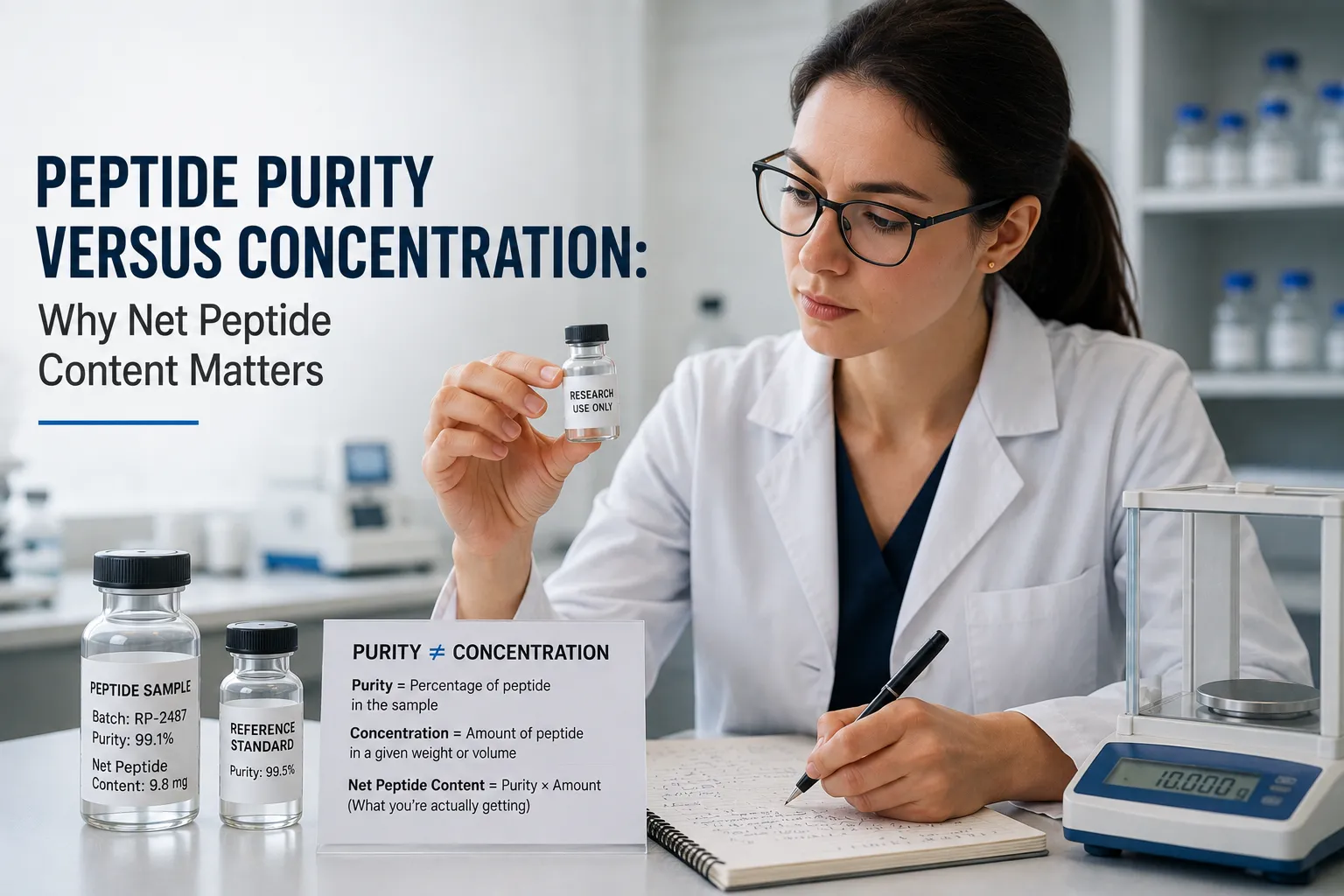
Peptide Purity Versus Concentration: Why Net Peptide Content Matters
Three terms cause more confusion in peptide documentation than any others: purity, concentration and net peptide content. They are often used interchangeably, yet they describe entirely different things, and conflating them leads people to compare products that are not actually comparable. Understanding the difference is one of the most practically useful skills for anyone assessing […]
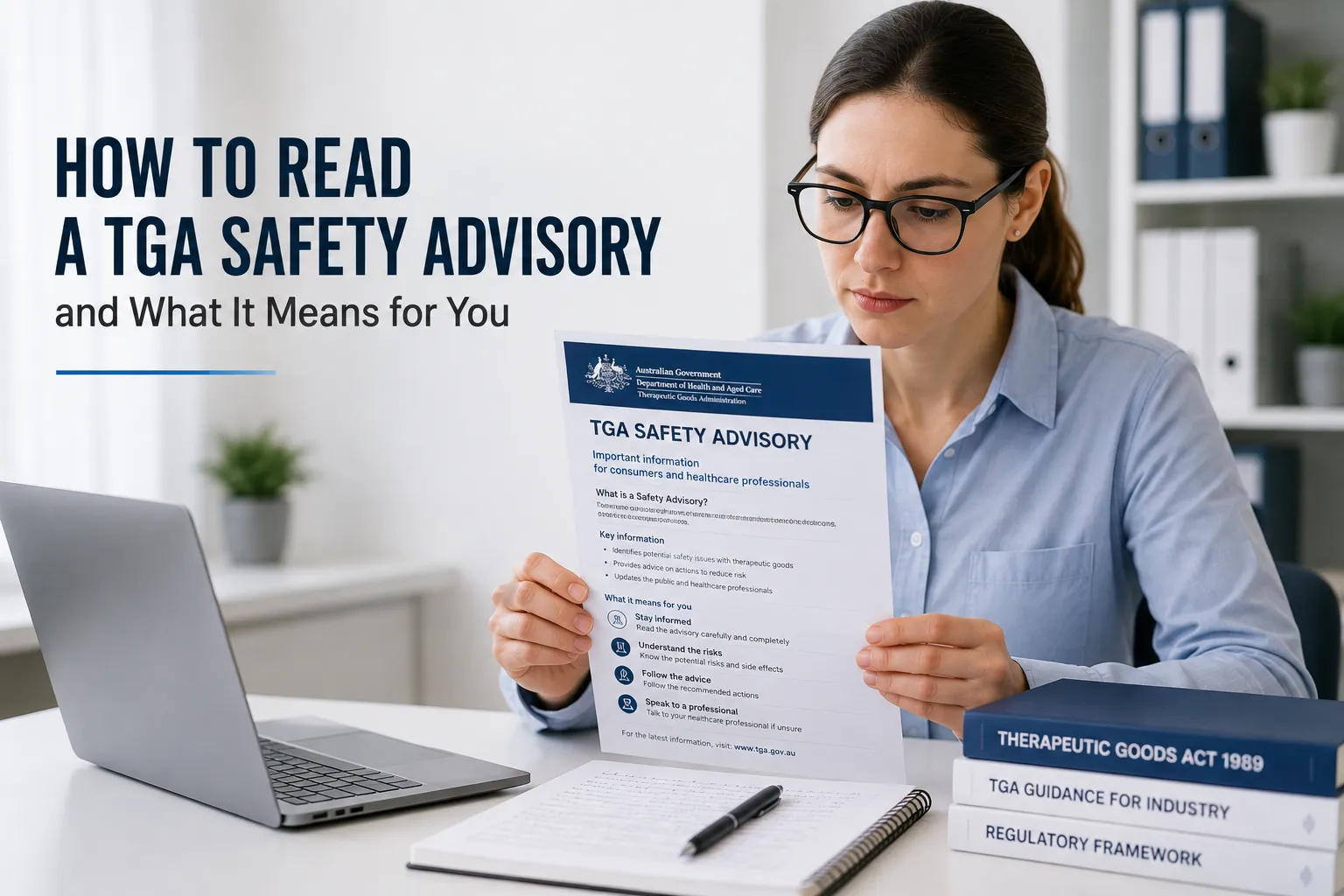
How to Read a TGA Safety Advisory and What It Means for You
The Therapeutic Goods Administration publishes a steady stream of safety advisories, warnings, alerts and enforcement notices, and this area has been especially active through 2026. For anyone following the research compound space, being able to read these documents accurately is a genuinely useful skill. An advisory is not the same as a recall, and neither […]

Melanotan 2 in Australia: Legality, TGA Warnings and What Buyers Should Know
Melanotan 2, often written as MT2, is one of the most searched peptides in Australia, largely because of its association with tanning. It is also one of the compounds the Therapeutic Goods Administration has specifically warned consumers about. Anyone researching this compound should understand its regulatory position, why it carries a warning, and the quality […]

Buying Research Compounds in Australia: Domestic Versus Overseas Suppliers
One of the most practical decisions a buyer in this market faces is whether to purchase from a domestic supplier operating within Australia or to order directly from overseas. The choice is often framed purely around price, where overseas can appear cheaper, but that framing ignores the factors that most affect whether an order arrives, […]
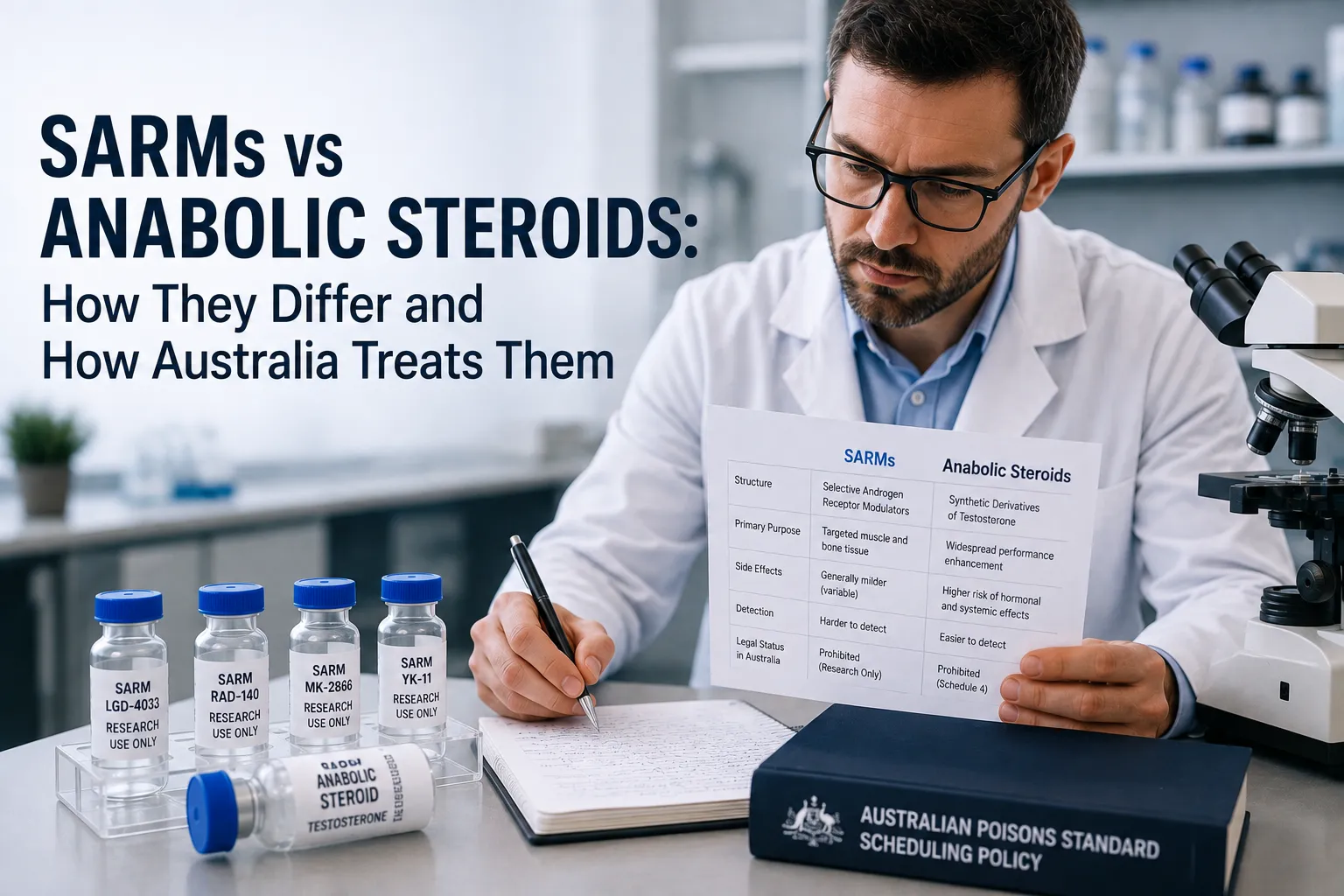
SARMs vs Anabolic Steroids: How They Differ and How Australia Treats Them
One of the most common questions in this field is how SARMs differ from anabolic steroids. The two are frequently discussed together, marketed to overlapping audiences, and often assumed to be interchangeable or to sit at different points on the same spectrum. In reality they are chemically distinct classes with different mechanisms, and Australian law […]
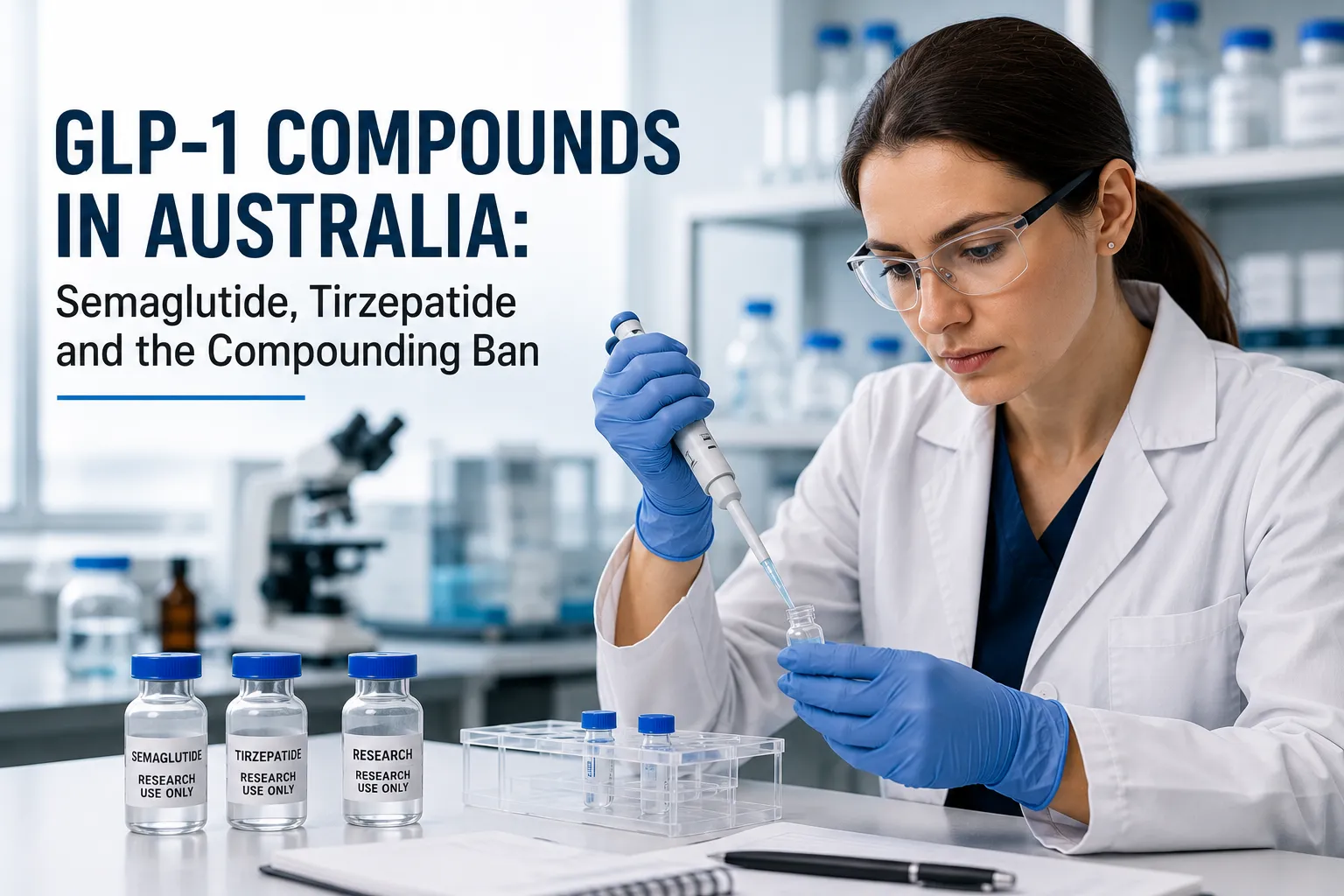
GLP-1 Compounds in Australia: Semaglutide, Tirzepatide and the Compounding Ban
Few areas of the therapeutic goods landscape have moved as quickly, or attracted as much regulatory attention, as GLP-1 compounds. Semaglutide, tirzepatide and newer molecules such as retatrutide are among the most searched substances in Australia, and around them has grown a large market of compounded and unapproved copies. The rules governing this space changed […]