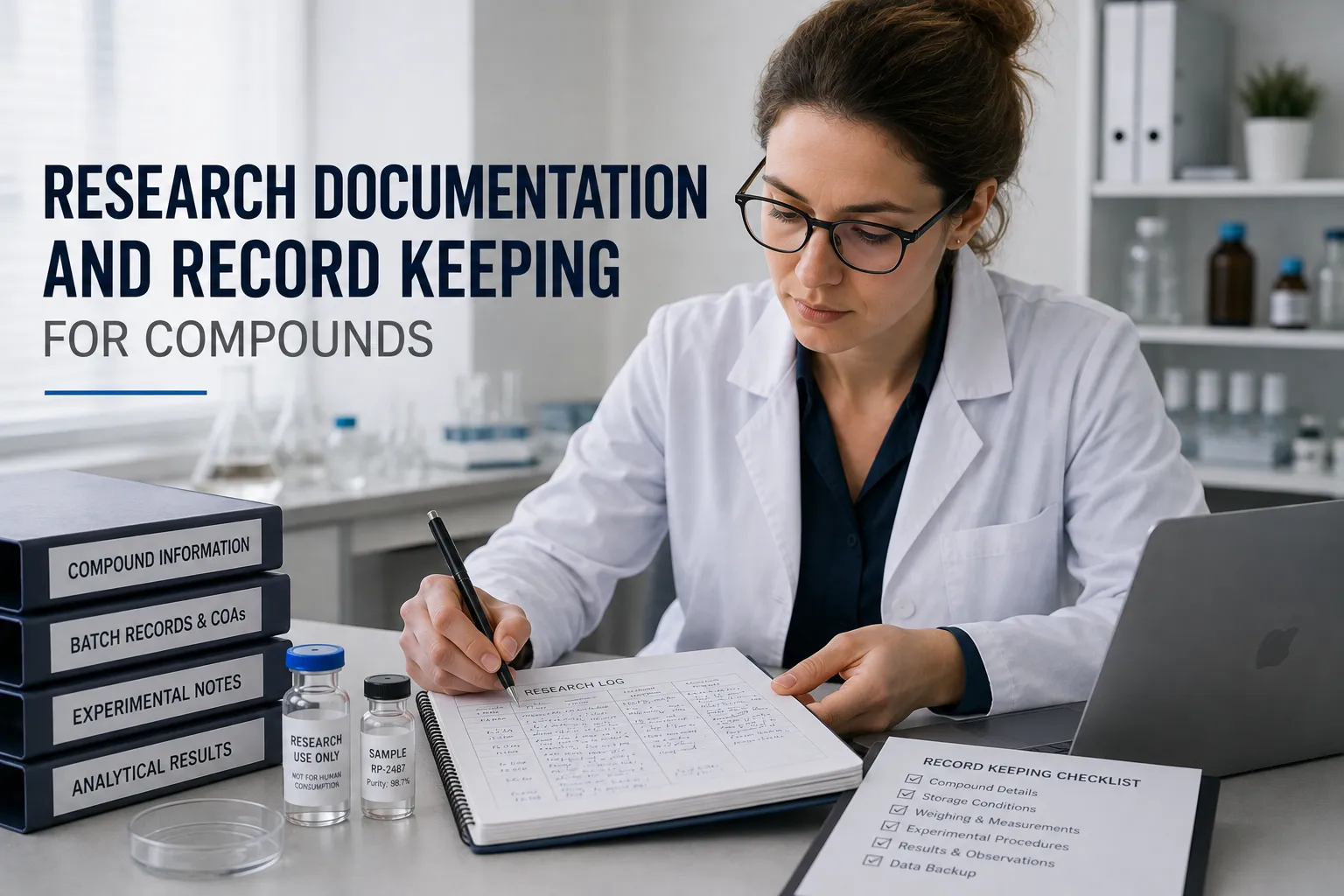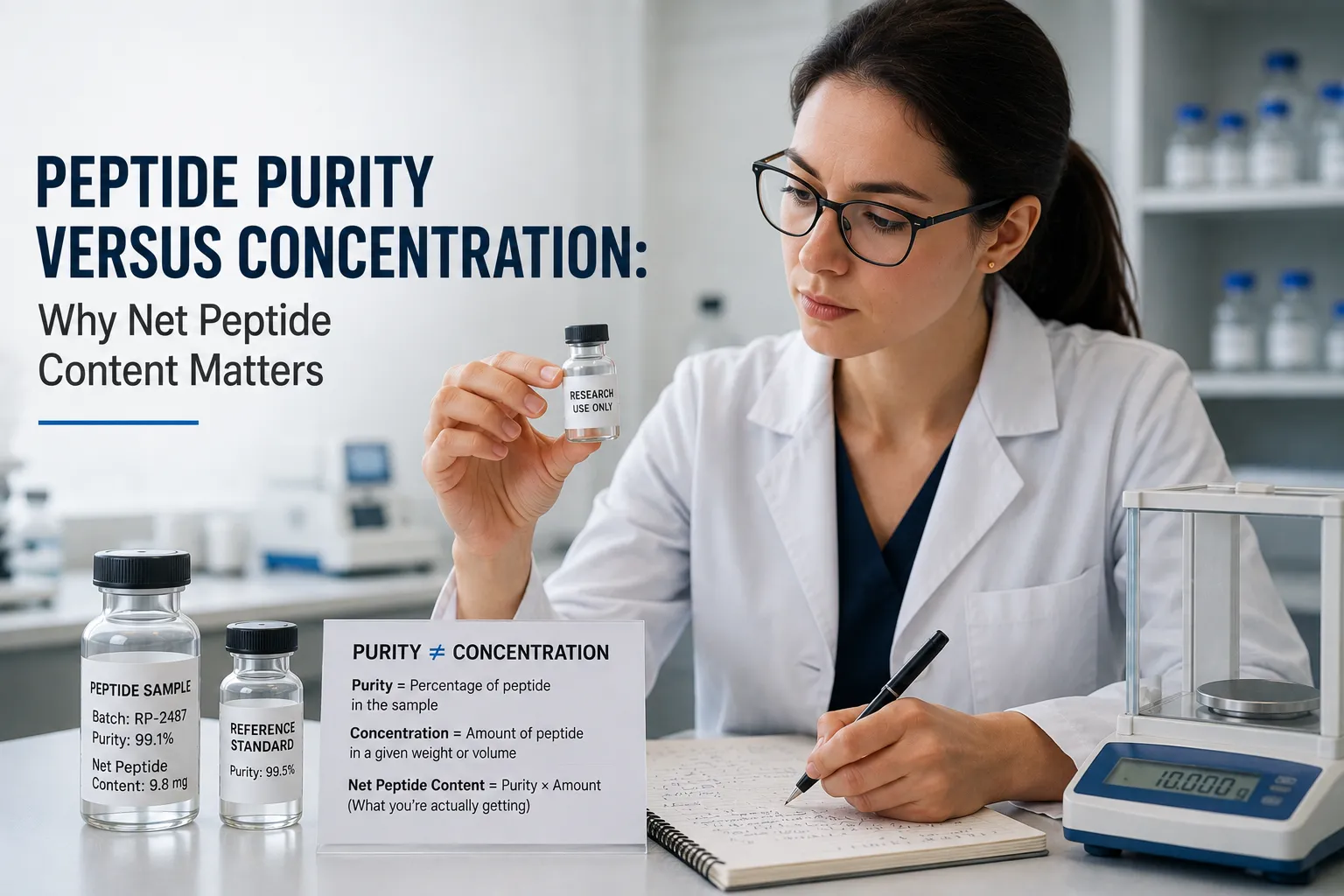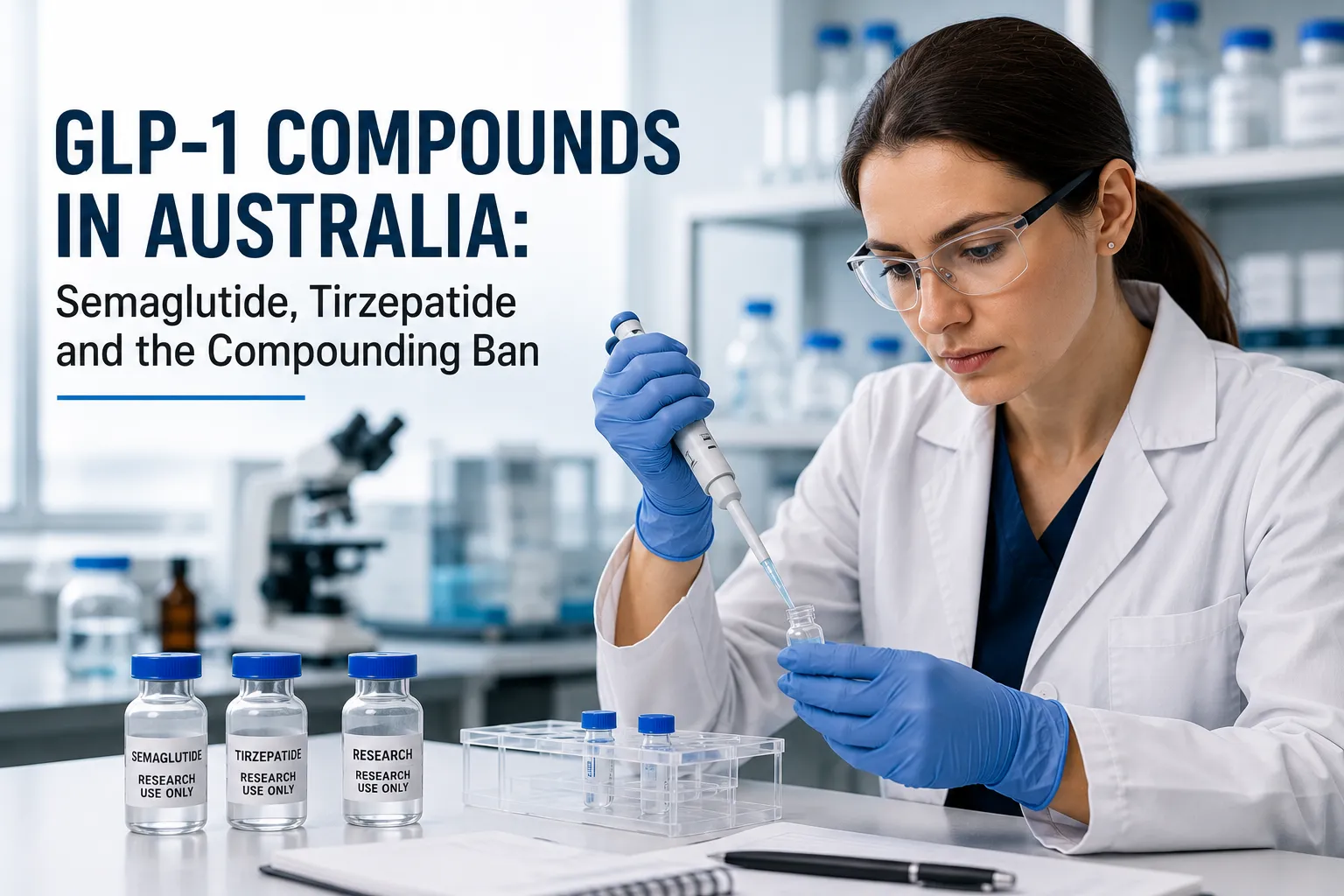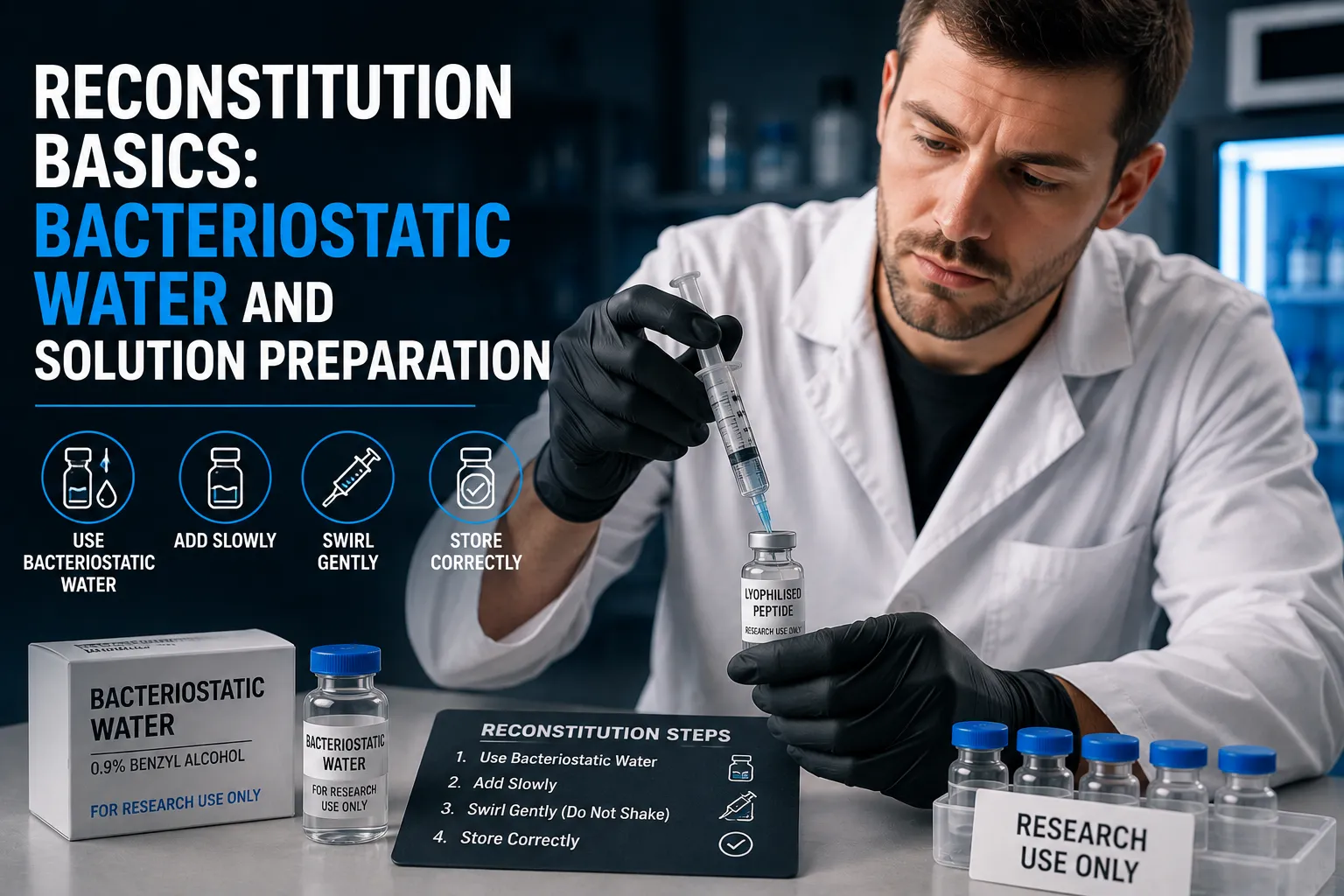
Reconstitution is the process of returning a lyophilised, freeze dried compound to a liquid state by adding a diluent. It sounds simple, and mechanically it is, but the choices involved have real consequences for the stability and integrity of the material. Understanding what bacteriostatic water is, how it differs from other diluents, and why handling […]
Category Archives: Peptides
In a market where product quality is invisible to the naked eye and documentation can be fabricated, choosing a supplier is largely an exercise in assessing transparency and process rather than judging the product directly. You cannot see purity, sterility or identity by looking at a vial. What you can assess is whether a supplier […]
A research peptide vial carries a surprising amount of information in a small space, and reading it correctly is the difference between knowing what you have and merely assuming it. Naming conventions, strength figures, salt forms and batch codes each tell you something specific, and each is a point where a product can be misrepresented. […]
For anyone who competes in organised sport in Australia, the anti-doping framework is a separate and serious layer of rules that sits entirely apart from questions of whether a substance is lawful to buy or possess. A compound can be legally obtained and still end a sporting career. This guide explains how SARMs and peptides […]
Peptides are chemically fragile. A material that arrives at high purity can degrade substantially within weeks if it is stored poorly, and the resulting loss of integrity is often invisible, because the powder looks the same. For anyone handling these compounds in a laboratory setting, storage discipline is not an afterthought. It is what preserves […]